The Short Version
I used to buy battle passes. The early ones felt like a reasonable trade: pay a modest amount, play the game I already liked, and unlock a track of cosmetics and small rewards at my own pace. That version of the deal is mostly gone.
What replaced it is a system that assumes I can (and will) log in regularly, complete a long list of challenges, and treat the game like a second part-time job for two or three months. When I cannot keep up, the pass simply expires and the money is gone.
Battle pass fatigue is real for players with jobs, kids, and limited free time. Publishers keep designing as if that fatigue does not exist.
A good game should earn your evening. A battle pass often tries to schedule it.
How the Model Shifted
The original promise was simple. Pay once per season, earn rewards by playing, and never feel forced into microtransactions for the core track. In practice the systems evolved toward longer tracks, more granular challenges, and higher time requirements.
Many current passes need consistent weekly play to finish comfortably. Miss a week because of work trips, sick kids, or just life, and the remaining challenges stack up. The game starts sending soft pressure: “You are behind.” “This reward expires soon.” “Complete these three challenges before the season ends.”
For someone who plays two or three evenings a week, that pressure turns a hobby into a set of obligations. I began noticing that I was opening certain games not because I felt like playing them, but because I did not want the pass I had already paid for to go to waste.
That is the opposite of why I play games.
What Limited-Time Players Actually Experience
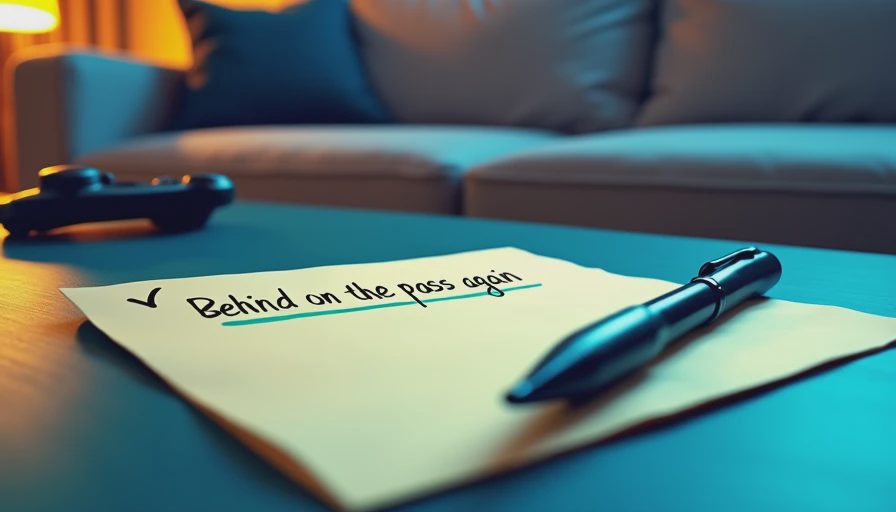
When your free time is scarce, a battle pass creates a quiet tax on every session. Part of the evening is spent checking the challenge list, optimizing for progress, and deciding whether the remaining rewards are still worth the effort. The fun of the core game gets mixed with administrative work.
I have quit more than one season early even after paying. The remaining challenges required modes or playstyles I did not enjoy, or simply demanded more hours than I had left. The money was spent. The rewards stayed locked. The game had successfully extracted payment without delivering the full experience it advertised.
The worst part is the lingering sense of waste. You paid for a track of items. Life intervened. The track disappeared. Publishers call this “engagement.” Players with normal schedules experience it as a loss.
Why Publishers Keep Pushing It
From the business side the model works. It creates recurring revenue, encourages regular logins, and turns cosmetic desire into a timed obligation. Data probably shows that a large enough segment of the player base completes the passes or at least pays for them.
That segment is not the only audience. A lot of adults play in short, irregular windows and have no interest in treating a game like a seasonal job. The industry has largely decided those players are acceptable collateral. The passes keep shipping with the same long tracks and the same soft pressure systems.
Some games have experimented with more flexible approaches—longer seasons, catch-up mechanics, or the ability to finish a previous pass later. Those experiments are still the exception. The default remains a system optimized for high-engagement players.
What Would Actually Help
A few design changes would make battle passes far less hostile to limited-time players:
Reasonable total time requirements that a couple of evenings a week can finish
Challenges that can be completed in the modes people already enjoy
Clear catch-up systems so missing a week does not kill the season
The option to keep progressing on a pass after the season ends, even if the exclusive window has closed
None of these changes would destroy the revenue model. They would simply stop punishing players whose lives do not revolve around the game’s calendar.
Until those changes become standard, I treat most battle passes as optional at best and a trap at worst.
My Current Rule
I no longer buy a battle pass on day one. I play the season for a week or two first. If the challenges fit the way I already play and the time requirement looks realistic for my schedule, I consider it. If the track is clearly designed for daily or near-daily play, I skip it.
I have saved money and a noticeable amount of low-level stress this way. The cosmetics I missed have never been worth the evenings I would have spent chasing them.
Final Thought
Battle pass fatigue is not a skill issue or a commitment problem. It is the predictable result of a system that treats player time as an unlimited resource and then sells that time back to the player in the form of timed reward tracks.
Publishers can keep pretending the model works for everyone. Regular players with jobs and families already know it does not. The smartest response is simply to stop participating in the parts that do not respect your actual life.
You do not owe any game a season of scheduled evenings. The good ones earn the time you freely give. The rest can keep their passes.
A good game should earn your evening—not rent it by the season.
No comments yet — grab the first one.