When you only have an hour after work, dinner, homework, and the mysterious disappearance of every clean towel in the house, choosing a game matters. Games that respect your time do not confuse length with value. They get you playing quickly, give your session a satisfying shape, and avoid turning a Tuesday night into a second job. I have spent enough evenings staring at menus, downloading updates, and riding across enormous maps to know that a good game should earn your evening.
What makes a game worth your limited free time?
The best time-friendly games remove friction. You can pause them without losing progress, understand the controls quickly, and accomplish something meaningful in 20 to 60 minutes. That might mean finishing a mission, solving a puzzle, improving a character, or simply enjoying a complete match. Games that respect your time usually have strong checkpoints and clear objectives, so you are not spending the first half of your session remembering where you were.
Pacing matters just as much as total hours. A focused eight-hour adventure can feel more generous than a 100-hour open-world game padded with errands. Short games such as Cocoon, A Short Hike, and Inside show how much atmosphere and personality developers can deliver without asking for a month of evenings. On the larger side, games like Spider-Man: Miles Morales and Hi-Fi Rush keep their campaigns moving instead of burying the fun under repetitive chores.
I also look for menus that explain themselves, difficulty options that do not punish experimentation, and save systems that work reliably. These details sound small until you have a child calling from upstairs or a meeting at 7 a.m. The ability to stop cleanly is not a luxury. It is part of good design.

Games that respect your time are built around momentum
A respectful game gives you a reason to continue without making continuation mandatory. Hades is a great example. A run can take around 20 minutes, and even a failed attempt usually unlocks dialogue, upgrades, or new story beats. You can stop after one run or play for two hours, and both choices feel legitimate. That is a much better fit for adult schedules than a game that demands a three-hour commitment before anything interesting happens.
Turn-based games can work especially well because they let you pause naturally. Into the Breach delivers compact tactical battles with clear goals, while Balatro makes a single run easy to understand and difficult to put down. On the console side, smaller levels in games such as Hitman: World of Assassination or Dishonored can be approached as individual evening projects. You do not need to finish the whole campaign to feel progress.
Multiplayer games deserve the same scrutiny. A match-based game can be time-friendly when rounds have predictable limits, but a battle pass full of daily obligations changes the relationship. If missing a day feels like falling behind, the game is borrowing more attention than its match length suggests. Rocket League, Mario Kart 8 Deluxe, and Overcooked 2 generally make it easier to play a few rounds and leave without guilt.
The best genres for busy players
Puzzle games are an obvious starting point because their progress is usually measured in solved problems rather than hours logged. The Witness is open-ended and thoughtful, while Dorfromantik offers a calmer experience that can fit around interruptions. If you want story, look at focused adventures such as Firewatch, What Remains of Edith Finch, or Oxenfree. These games have a clear arc and do not require you to memorize a skill tree before the plot gets moving.
Roguelites are another strong choice, provided their runs are reasonably short. Vampire Survivors turns movement and upgrades into a satisfying 30-minute loop. Dead Cells offers more demanding action but still breaks its campaign into discrete attempts. If you prefer something relaxing, Stardew Valley can be excellent, though its open-ended structure can also become a commitment. The trick is choosing a game whose loop matches your available energy, not just your available clock.
For cooperative play, consider games where players can contribute at different skill levels. Minecraft Dungeons, Untitled Goose Game, and Snipperclips are easier to share than a highly competitive shooter. A good co-op game lets one player learn while the other helps, rather than turning family time into a coaching session with raised voices.
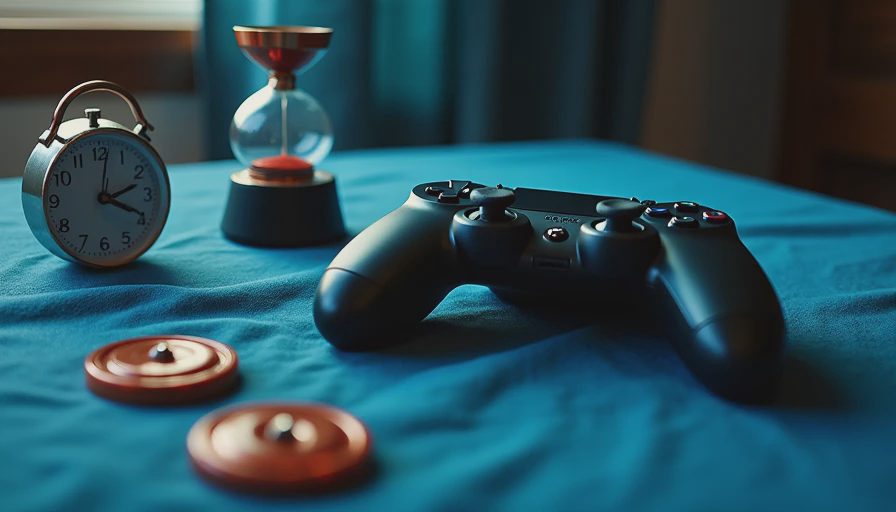
How to find games that respect your time before buying
Start with the first two hours, not the advertised campaign length. Watch a spoiler-light gameplay video and ask practical questions. How long does it take to reach the first checkpoint? Can you pause during a cutscene or mission? Does the game save when you quit? Are side activities optional, or does the main path constantly push you toward grinding?
Read player comments for phrases such as repetitive, slow start, daily chores, forced stealth, and huge map. None of these automatically means a game is bad. They reveal the shape of the commitment. A 15-hour game with a slow opening may be a poor weeknight choice, while a 60-hour game with quick missions could fit perfectly if you enjoy returning to it in small pieces.
Price should enter the calculation too. A $20 indie that you finish and remember can be better value than a $70 release that becomes homework after three sessions. Subscription services from Xbox, PlayStation, and PC storefronts can lower the risk, but a large catalog can create its own problem: spending 30 minutes browsing instead of playing. Put a short list together before opening the app.
When a long game can still earn your evening
Long games are not automatically disrespectful. The issue is whether they give you control over the pace. The Legend of Zelda: Tears of the Kingdom lets you wander, solve a shrine, and stop. Baldur's Gate 3 provides turn-based combat and frequent manual saves, although its conversations and decisions can easily turn one evening into four. Persona 5 Royal offers tremendous value, but its calendar structure and lengthy scenes require a more reliable block of free time.
The same principle applies to open-world games. Look for fast travel, generous checkpoints, and missions that can be completed without clearing every collectible. If a game respects your time, you should be able to ignore half its map and still enjoy the central experience. Completion percentage is not a moral score, and the game should not treat it like one.
A simple weeknight test
Before committing, play for three sessions of roughly 45 minutes. Notice how much of that time is spent actually making decisions or controlling the character. If loading screens, crafting menus, tutorials, and travel consume most of the evening, pay attention to that feeling. Your schedule is giving you useful information.
Then ask whether you stopped because the session reached a natural endpoint or because the game exhausted you. Games that respect your time tend to make stopping feel clean while still leaving you curious about the next session. That balance is the whole point. You should be able to close the laptop, put down the controller, and feel that the evening counted.
Here is the short version: choose clear loops, dependable saves, flexible difficulty, and campaigns that do not mistake repetition for value. Skip the daily checklist if it feels like work. A good game does not need all of your free time to prove it is worthwhile; it needs to make the time you give it feel well spent.
No comments yet — grab the first one.