The hardest part of finding new games is not discovering something interesting. It is figuring out whether that game deserves the small piece of free time you actually have. After work, dinner, chores, and the bedtime routine, a two-hour gaming window is valuable. New games arrive constantly, but not every colorful trailer deserves your money or your Saturday night.
Here is the short version: look for a clear hook, a reasonable learning curve, and a play structure that fits your schedule. A game does not need to be enormous, photorealistic, or packed with hundreds of icons to be worth playing. It needs to make you want to come back tomorrow. A good game should earn your evening.
How to judge new games before buying
Start with the first hour, not the marketing campaign. Watch a few minutes of unedited gameplay and ask practical questions. Does the game explain its systems without burying you in menus? Can you pause during a family interruption? Does the core loop sound fun after the novelty wears off? These answers matter more than a cinematic trailer.
Price also changes the recommendation. A $20 indie release has a different burden of proof than a $70 blockbuster. A short, polished adventure can be excellent value if it delivers eight focused hours. Meanwhile, a large open-world game can become expensive in a different way if it demands dozens of repetitive errands before reaching the good parts.
Check the platform details before purchasing. Some new games launch on PlayStation 5 and Xbox Series X|S but skip older consoles. Others arrive on PC with demanding hardware requirements or a rough keyboard setup. Look for accessibility options, subtitles, controller support, cloud saves, and whether online play requires a subscription. Those are not minor details when your available gaming time is limited.
Picks for short weekday sessions
The best new games for weeknights usually have natural stopping points. Mission-based action games, turn-based strategy, racing events, puzzle adventures, and compact roguelikes can all work well because one session feels complete. You can finish a chapter, clear a run, or complete three races without wondering where the last hour went.
Be cautious with games built around constant rewards and daily check-ins. Battle passes, rotating challenges, and limited-time events can turn entertainment into another obligation. That structure works for players who enjoy regular competition, but it can feel like homework after a long shift. If the game makes you feel behind whenever you take two nights off, it is not respecting your schedule.
For a busy adult, quick loading and reliable saving are major advantages. A game that lets you pause immediately is often more useful than one with a bigger map. Nintendo Switch titles, smaller PC releases, and many single-player console games can fit into that space especially well, although performance and save systems should still be checked before buying.
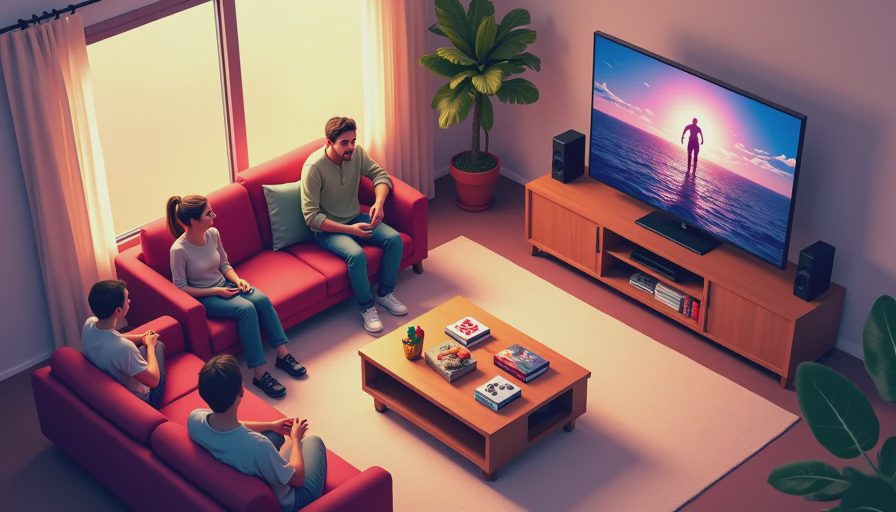
New games for couch co-op and family time
Co-op changes the buying decision because the game has to fit more than one person. The best choices offer simple controls, flexible difficulty, and enough variety that one player does not spend the entire session waiting. Overcooked, It Takes Two, Minecraft Dungeons, and Mario Kart are useful reference points because they make cooperation understandable quickly, even when the results become hilariously messy.
For younger players, avoid judging a title only by its age rating. Think about reading demands, camera control, scary scenes, and how much help an adult must provide. A nine-year-old may handle action easily but struggle with a complicated inventory screen. A six-year-old may enjoy collecting and exploring while becoming frustrated by a strict timer.
Local multiplayer is especially valuable when everyone is in the same room. Online co-op can be excellent, but it introduces headsets, accounts, connection issues, and scheduling. If your household has only one free hour together, a game that starts quickly is a better choice than a technically impressive title that spends twenty minutes on setup.
How to avoid hype-driven purchases
Hype is useful for finding new games, but it is a poor substitute for evidence. A trailer can show the most exciting ten seconds from a thirty-hour campaign. Influencers may also receive review copies before patches, while regular players encounter server queues or missing features at launch. None of that automatically makes a game bad, but it means you should separate promise from present performance.
Read impressions from people who played the version available to customers. Look for repeated comments about crashes, confusing progression, repetitive missions, aggressive monetization, or long unskippable sections. One complaint may be personal preference. Ten independent comments about the same problem deserve attention.
Do not preorder simply because a collector’s edition includes digital costumes. Most releases become easier to evaluate within a few weeks, and many receive discounts within a few months. Preordering makes sense when you already trust the developer, know the exact features, and plan to play immediately. Otherwise, waiting is a perfectly sensible gaming strategy, not a failure of enthusiasm.
New games that fit different moods
When choosing what to play, name the mood before naming the genre. If you want to relax, a farming simulator, exploration game, or management title may work better than an online shooter. If you need a fast energy boost, a racing game or arcade action title can deliver more satisfaction in thirty minutes. If you want a story, choose something with strong pacing rather than a huge map filled with chores.
For competitive players, consider whether the matchmaking community is healthy and whether the game supports practice against bots or solo modes. For role-playing fans, ask how much dialogue and inventory management you genuinely enjoy. For horror fans, check whether the tension comes from atmosphere or repeated surprise attacks. Small distinctions like these prevent a promising purchase from becoming another icon on your home screen.
I keep a simple phone note with three questions: What do I want to do, how long do I have, and who is playing? That takes less than a minute and cuts through a surprising amount of launch-week noise. A game can be excellent and still be wrong for tonight.
A simple checklist before you buy
Before spending $30, $50, or $70, check the store page for the release platform, download size, player count, and estimated structure. Look at recent user reviews rather than only the overall score. Confirm whether multiplayer is required, whether cross-play is supported, and whether the game includes a trial, demo, or subscription version.
Then set a time limit for your first session. Play for ninety minutes without rushing. Notice whether the controls feel natural, whether the tutorial respects your intelligence, and whether you are curious about the next objective. If you keep checking the clock, that is useful information. You do not owe a game more time because it has a famous studio attached to it.
The strongest new games usually reveal their appeal early while leaving room to deepen. They give you a reason to continue without demanding your entire calendar. That balance is more valuable than a massive feature list.
The bottom line for busy players
There is no universal winner among new games. The right pick depends on your platform, budget, mood, household, and available time. A short indie adventure might beat the year’s biggest release on a Tuesday night. A dependable co-op game might create better memories than a technically perfect solo campaign. A discounted older title might still be the smartest purchase of the week.
My advice is simple: follow the fun, not the launch calendar. Watch real gameplay, read current impressions, and choose a game that matches the evening you actually have. Save the ambitious hundred-hour epic for a season when you can enjoy it rather than feeling guilty about abandoning it.
If your gaming time is limited, this is the part that matters. The best new games are not necessarily the loudest ones. They are the ones that start cleanly, respect your attention, and leave you glad you played. That is a much better standard than simply asking what everyone else is talking about.
No comments yet — grab the first one.